What Is Corporate Debt Management? Types, Challenges, and Digital Transformation
Learn what corporate debt management is, explore key debt instruments, common challenges, and how digital treasury technology transforms debt management.
In today's business environment, debt acts as both an opportunity and a responsibility for large organizations and NBFCs. Whether the goal is expanding operations, entering new markets, acquiring assets, managing working capital, or funding large-scale projects, organizations require funds to sustain momentum. Raising debt is crucial, but managing it well is even more critical.
Today's corporates and NBFCs operate in an environment characterized by multiple borrowing instruments, diverse funding sources, fluctuating interest rates, foreign exchange volatility, and increased regulatory scrutiny. For NBFCs, the complexity is even higher because of multiple funding methods, strict regulatory requirements, and the need to manage asset-liability mismatches effectively.
As an organization's debt portfolio grows in scale and complexity, treasury teams need to move beyond manual tracking and fragmented systems to a modern, technology-driven approach to debt management.
Understanding Corporate Debt Management
What is debt management?
Debt management is the process of planning, raising, monitoring, servicing, and optimizing debt throughout its lifecycle. From debt origination to repayment or refinancing, every activity comes under debt management.
It also involves managing various debt instruments, lenders, repayment schedules, interest obligations, and associated risks to ensure that funding requirements are met efficiently while maintaining financial stability.
Key objectives of debt management
-
Ensure adequate funding
Debt management helps organizations meet both short-term and long-term financing needs. It supports growth, capital expenditure, acquisitions, and day-to-day working capital requirements while ensuring that funds are available when required without disrupting business operations.
-
Optimize cost of borrowings
For any organization, minimizing overall financing cost is important. Debt management helps secure the most appropriate debt instrument at a competitive rate, reducing financing costs and improving profitability.
-
Maintain liquidity to meet debt obligations
Organizations must maintain sufficient liquidity to meet debt obligations on time. Effective debt management helps prevent liquidity crunches, missed payments, and funding gaps.
-
Manage financial risk
Organizations face various risks throughout the debt lifecycle. Refinancing risk arises when an organization is unable to refinance an existing loan or repay it at maturity. Similarly, fluctuations in interest rates and foreign exchange markets can significantly impact borrowing costs. Effective debt management helps organizations monitor and mitigate these risks, ensuring smoother liquidity management and financial stability.
-
Ensure compliance
Every organization must comply with various rules, reporting obligations, and regulatory requirements. Debt management helps treasury teams monitor debt covenants, maintain lender reporting requirements, and stay audit-ready with accurate reporting.
Why Corporate Debt Management Matters
- Financial stability: Debt management makes sure that debt obligations, including loan repayments, interest payments, corporate bonds, and commercial paper, are met on time. This strengthens liquidity and improves cash flow management.
- Better decision-making: Debt management gives treasury teams visibility into debt positions and future obligations, helping them make proactive funding and refinancing decisions. This improves long-term financial health, creditworthiness, and operational viability.
- Risk reduction: Risk management is crucial for every treasury team. Debt management enables organizations to anticipate potential challenges and implement mitigation strategies before they impact business performance.
- Cost efficiency: Effective debt management eliminates unnecessary borrowing costs and helps avoid penalties from missed obligations. It also identifies opportunities for refinancing and cost optimization, improving financial performance.
Debt Management as a Strategic Treasury Function
Traditionally, debt management was viewed as an administrative function focused on tracking loans, monitoring repayment schedules, and ensuring timely servicing of debt obligations. In many organizations, treasury teams relied heavily on manual processes and spreadsheets to maintain debt records and lender information.
With the growing complexity of borrowing portfolios, debt management has evolved into a strategic treasury function. Optimizing funding strategies, improving capital efficiency, and supporting organizational growth are now key responsibilities of the modern treasury team.
Effective debt management directly influences an organization's liquidity position, profitability, and financial resilience. Well-structured debt portfolios enable organizations to access capital efficiently, minimize financing costs, and mitigate financial risks while maintaining sufficient liquidity to support business operations.
As organizations rely on a wide range of debt instruments to meet their funding requirements, understanding the characteristics of each instrument becomes important for building an efficient and well-diversified debt portfolio.
Types of Debt Instruments
Organizations use different debt instruments depending on their funding requirements, risk appetite, and market conditions. They cannot meet every requirement with a single instrument, so it is important to evaluate the right mix of instruments. A diversified portfolio improves financial flexibility and reduces overall risk.
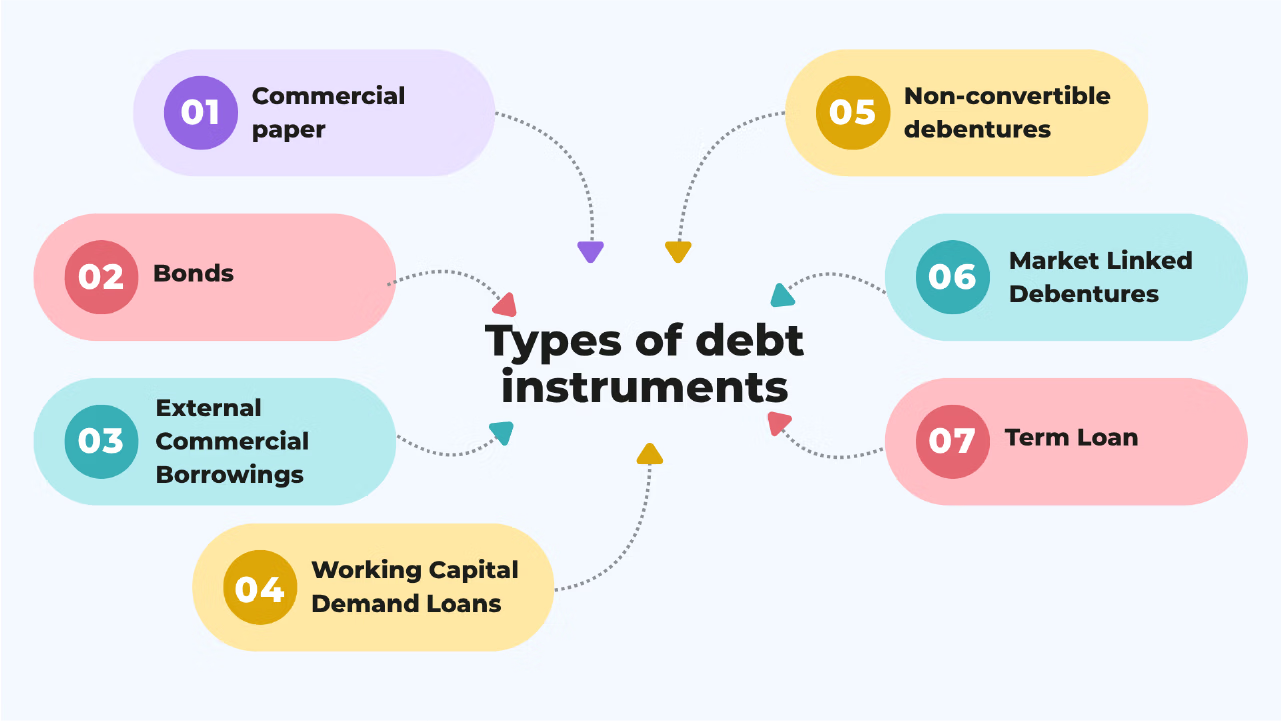
- Commercial paper: Commercial paper is a short-term, unsecured money market instrument. It is highly liquid and primarily used to meet working capital and short-term liquidity requirements. It usually has maturities ranging from seven days to one year and generally offers a lower borrowing cost than short-term bank loans. Because of its liquidity and flexibility, commercial paper is often used by highly rated corporates to manage temporary funding requirements.
- Non-convertible debentures: Non-convertible debentures, or NCDs, are medium- to long-term debt instruments that cannot be converted into equity shares. They are used for business expansion, capital expenditure, and debt refinancing. NCDs can be publicly offered or privately placed to a pre-approved group of investors and may carry fixed or floating interest rates.
- Bonds: Bonds are long-term debt instruments used by large organizations to meet funding needs while accessing a broader investor base. They are suitable for organizations planning large-scale investments and strategic projects. Bonds may be issued domestically or internationally depending on the needs of the company.
- Market-linked debentures (MLDs): Market-linked debentures differ from traditional NCDs because they do not offer periodic interest. Their returns are linked to market benchmarks or indices. MLDs are increasingly used by organizations, especially NBFCs and financial institutions, for structured financing requirements.
- External commercial borrowings (ECBs): External commercial borrowings involve borrowing funds from foreign lenders and international financial markets. ECBs allow organizations to access foreign capital markets directly and may provide lower borrowing costs. They are often used to finance overseas expansion and large projects.
- Term loans (TL): Term loans are among the most common long-term borrowing instruments used by organizations for medium- and long-term funding requirements. A term loan offers a defined repayment schedule and tenure and is commonly used for capital expenditure, acquisitions, and expansion projects.
- Working capital demand loans (WCDL): Working capital demand loans support day-to-day operational requirements. These loans help businesses manage temporary cash flow mismatches, fund operating expenses, and maintain business continuity during periods of fluctuating liquidity.
Each instrument offers unique advantages and challenges. As organizations manage multiple instruments, lenders, repayment schedules, and compliance obligations simultaneously, debt management becomes increasingly complex.
Challenges in Traditional Debt Management
As organizations diversify their funding sources and debt instruments, managing debt through spreadsheets and disconnected systems becomes increasingly challenging. Manual processes consume treasury resources, limit visibility, increase operational risk, and hinder strategic decision-making.
Some key challenges include:
- Fragmented debt information: Debt information is often scattered across spreadsheets, emails, ERP systems, and bank portals, making it difficult to obtain a consolidated view of outstanding obligations.
- Limited visibility and control: Treasury teams struggle to track multiple lenders, instruments, repayment schedules, and maturities in real time, making proactive funding decisions more difficult.
- Manual debt servicing: Tracking interest payments, principal repayments, and refinancing schedules manually increases the risk of penalties, compliance issues, and missed obligations.
- Inefficient risk management: As debt portfolios grow, it becomes difficult to monitor interest rate movements, foreign exchange exposures, refinancing risks, and covenant compliance.
- Limited strategic insights: Traditional processes provide limited support for forecasting, scenario analysis, and borrowing cost optimization, restricting data-driven decision-making.
As debt portfolios continue to expand, organizations require a more centralized, automated, and intelligent approach to debt management that provides real-time visibility, minimizes risk, and supports strategic treasury operations.
Transforming Debt Management with Treasury Technology
As organizations grow, debt portfolios continue to increase in size and complexity. Traditional debt practices are no longer sufficient to meet the evolving needs of treasury teams. Manual processes and fragmented systems limit visibility, increase operational risks, and make it difficult to respond proactively to changing market conditions.
To address these challenges, treasury teams are increasingly adopting Treasury Management Systems that automate the entire debt lifecycle, enhance financial visibility, and enable smarter, data-driven decision-making.
Automation across processes such as loan booking, interest calculation, payment tracking, and compliance monitoring reduces manual effort, minimizes errors, and improves operational efficiency. It also provides real-time visibility into treasury operations, enabling treasury teams to make informed funding and refinancing decisions.
Treasury technology strengthens risk management by helping teams monitor forex exposures, interest rates, refinancing risks, and covenants. With enhanced transparency and data-driven insights, organizations can optimize borrowing costs, improve liquidity planning, and transform debt management from an operational task into a strategic treasury function.
IBSFINtech Debt Management Solution
Managing a diverse debt portfolio requires more than tracking borrowings. It demands complete visibility, automation, and control across the entire debt lifecycle.
IBSFINtech's Debt Management Solution enables organizations, especially NBFCs, to manage diverse debt portfolios through a centralized treasury management system. It helps treasury teams make informed funding decisions while ensuring timely debt servicing and regulatory compliance.
The solution is trusted by leading corporates and NBFCs such as Edelweiss Group and 360 ONE to manage diverse and complex debt portfolios. IBSFINtech supports multiple debt instruments, entities, and lenders, helping automate the complete debt lifecycle while improving visibility, compliance, and operational efficiency.
FAQs
What is debt management in corporate treasury?
Debt management is the process of planning, raising, monitoring, servicing, and optimizing debt throughout its lifecycle.
What challenges do corporates face in debt management?
The most common challenges are fragmented debt information, limited visibility and control, manual debt servicing, inefficient risk management, and limited strategic insights.
How does debt management benefit NBFCs?
Debt management helps NBFCs manage complex debt portfolios, multiple borrowing sources, covenants, and interest calculations. It improves overall efficiency and reduces manual errors.
What are the various types of debt instruments?
Common debt instruments include commercial paper, non-convertible debentures, bonds, market-linked debentures, external commercial borrowings, term loans, and working capital demand loans.
What features do modern debt management systems offer?
Modern debt management systems offer centralized visibility, automated interest calculations, covenant tracking, repayment monitoring, risk controls, compliance support, and insights for better funding decisions.